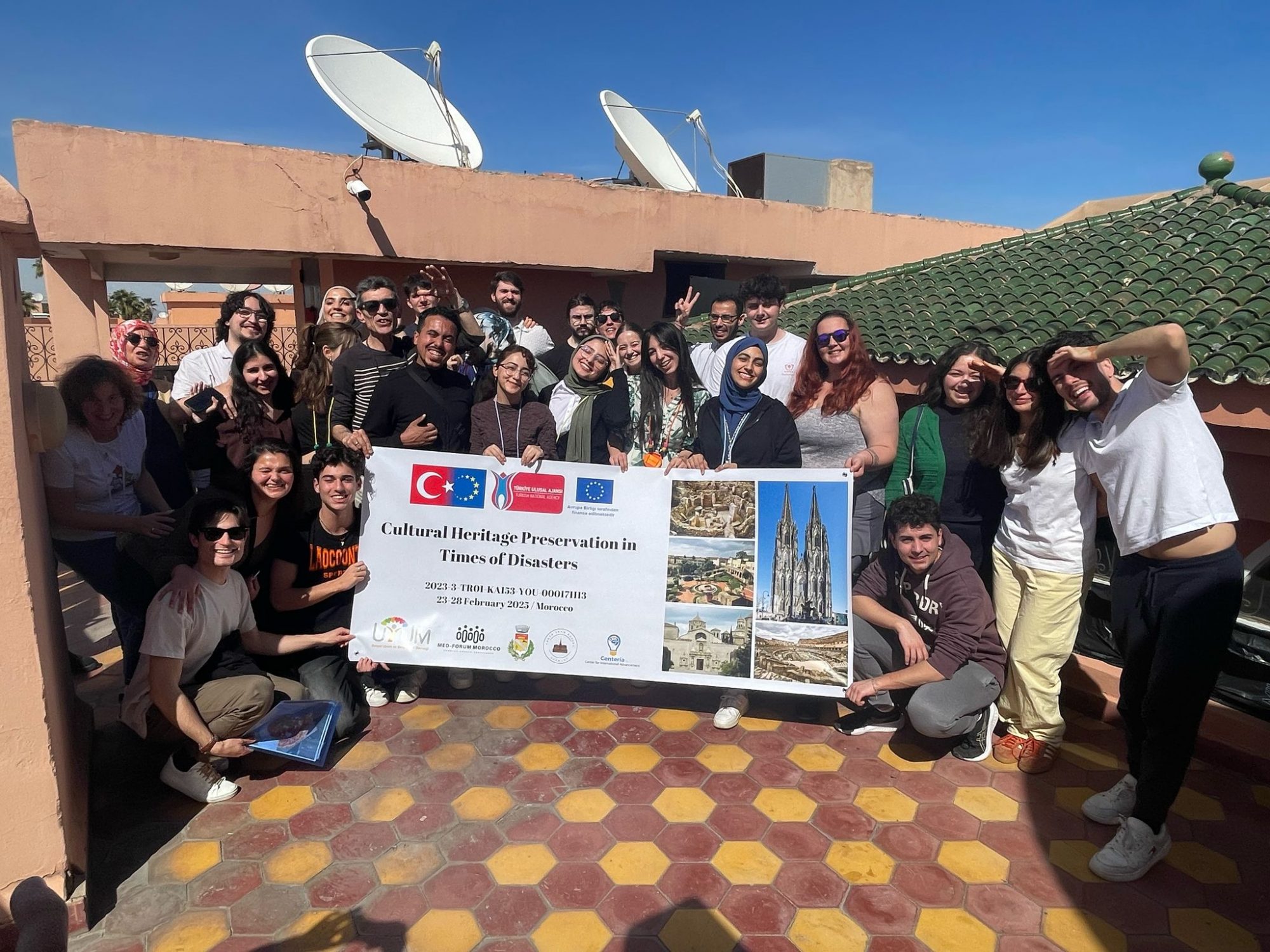
Cultural heritage is a significant phenomenon that has survived from the past to the present and occupies an important place in the collective memory of a society. It is a treasure that strengthens social solidarity and the sense of unity. It encompasses all material and intangible values that ensure the transmission of accumulated human experiences and traditions to future generations. Tangible cultural elements are embodied in spaces that bear deep traces of social history. These places are more than mere locations; they serve as vital representations of a nation’s—and more broadly, humanity’s—shared history and life, illuminating the past through their enduring presence.
For this reason, UNESCO adopted the Convention Concerning the Protection of the World Cultural and Natural Heritage on 16 November 1972, thereby placing under protection cultural areas significant to human history. Sites such as Göbeklitepe in Türkiye, the Colosseum in Italy, Cologne Cathedral in Germany, the Medina of Meknes in Morocco, and the Poblet Monastery in Spain are only a few of the important cultural heritage areas safeguarded under this convention. UNESCO’s decision to protect these and many other sites is grounded in meaningful reasons. Keeping alive all objects and places that remind us of the past is essential for societies today and in the near future, as these elements cannot be separated from the history of humanity. Another key reason is the necessity of preserving social memory. These places, inherited from the past, make significant contributions to sustaining our social identity and collective memory. In addition to historical cities, monuments, and archaeological sites, intangible values such as language, traditions, dance, music, cuisine, and rituals also form an important part of cultural heritage. Raising awareness to ensure that these values are not lost and continue to be preserved is crucial.
Finally, cultural heritage serves as a bridge between our history and the present, minimizing the effects of the historical discontinuity we experience. Therefore, these sites are essential memory spaces that must be preserved. Unfortunately, cultural assets of great significance are particularly vulnerable during times of disaster and often face damage. The devastating earthquakes that occurred in Türkiye on 6 February 2023, the flooding in Italy on 2 May 2023, and the earthquake in Morocco on 10 September 2023 have shown that we are living in a world surrounded by disasters, that it is impossible to prevent such severe natural events, and that these heritage sites—integral to our cultural identity—may be destroyed or damaged at any moment. For instance, due to the earthquake in Türkiye, important cultural heritage sites (such as Göbeklitepe and the Germuş Church) were damaged, and some places were unfortunately destroyed. The destruction of these sites after the disaster signifies the following: